

In a context of rising energy costs and an increasingly imperative energy transition, energy monitoring is emerging as an essential tool for businesses, local authorities, and even individuals. But what exactly is it? How is it implemented, and what benefits can be gained? Powesco provides the answers.
What is energy monitoring?
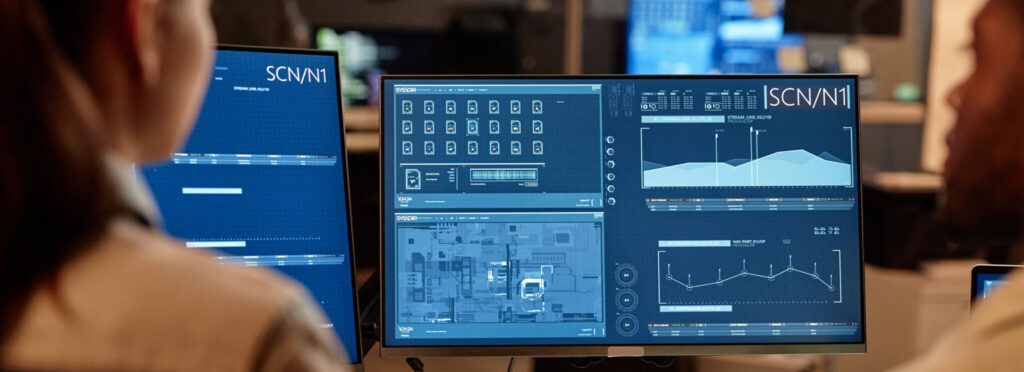
Energy monitoring refers to all the tools and methods used to measure, analyze, and manage the energy consumption of a building, industrial site, or real estate portfolio. This is achieved through connected sensors or building management systems (BMS/BAS) . The data is then centralized on a software platform , often in the form of dashboards, graphs, or alerts. It becomes possible to visualize electricity, gas, water, and heat consumption in real time. This is an essential component of any energy efficiency. strategy
The objective is not only to observe, but above all to understand and act : to identify deviations, detect overconsumption, and guide energy efficiency actions.
Why has energy monitoring become essential?
- Controlling costs
By identifying periods or areas of overconsumption, monitoring makes it possible to reduce energy expenses without compromising comfort or production. - Reducing your carbon footprint
: Monitoring consumption is also the first step towards a low-carbon approach. A better understanding of your usage helps to implement concrete actions to reduce CO₂ emissions. - Complying with regulations
With increasing obligations regarding energy performance (Tertiary Decree, ISO 50001, etc.), having a monitoring tool becomes an asset to comply with standards and justify progress. - Raising awareness among teams
: Monitoring is not just a technical tool; it is also a lever for mobilization. By making consumption visible, it fosters a culture of energy efficiency.
How to perform energy monitoring?
Implementing energy monitoring is not limited to installing meters. It relies on a structured, multi-step approach:
- Defining objectives
First of all, it is necessary to determine what we want to measure and why: reduce the bill, detect anomalies, manage a sobriety plan, etc. - Collect the data.
Install smart sensors and meters to monitor electricity, gas, water, or heat (multi-fluid) consumption. This data must be reliable, continuous, and centralized. It is transmitted in real time or at regular intervals via wired, wireless, or hybrid remote meter reading. - Analyzing the results:
Monitoring software centralizes and processes data to produce key energy performance indicators (kWh/m², kWh/UT, etc.) that can be visualized as graphs and dashboards. This makes it possible to identify deviations, consumption peaks, and areas forenergy optimization. - Implementing corrective actions:
Energy managers can then adjust settings, detect anomalies, improve performance, or define energy-saving action plans. Adjusting settings, raising team awareness, scheduling work, or automating certain regulations: monitoring is only valuable if it leads to concrete actions. - Monitoring progress over time:
Monitoring must be part of acontinuous improvement. By comparing consumption from one period to another, we can measure the real impact of the actions taken.
Good to know: some solutions go further with features such asautomatic alerts, forecasting (thanks to AI) or integration with building management systems (BMS).
What indicators are needed for energy management?
Here are a few examples:
- Total consumption and consumption by use (heating, lighting, ventilation…).
- Power demand, load factor.
- Associated CO₂ emissions.
- Energy performance indicators (EPI).
- Energy costs per unit produced or per m².
What are the advantages of energy monitoring?
Experience shows that implementing energy monitoring can lead to:
- energy savings , depending on the initial level of maturity;
- improved responsiveness to malfunctions (leaks, drifts, programming errors);
- a clear and real-time view of consumption: complete traceability for energy audits which facilitates decision-making and regulatory reporting (DPE, tertiary decree, etc.).
continuous improvement through visualization of progress over time.


How to finance an energy monitoring project?
Setting up an energy monitoring system represents an initial investment : sensors, software platform, installation, technical support… However, several financing mechanisms make it possible to significantly reduce the cost.
1. Energy Savings Certificates (CEE)
The Energy CEE) is one of the best-known mechanisms. It is based on the "polluter pays" principle: energy suppliers (electricity, gas, fuel, etc.) finance energy efficiency measures for their customers. Certain monitoring projects, particularly those that contribute to detecting and reducing consumption, can be partially subsidized through this scheme.
2. Public and regional aid
Several programs supported by the State, ADEME (the French Agency for Ecological Transition), or local authorities can finance the deployment of energy monitoring tools, especially if they are part of a broader approach (energy audit, energy efficiency plan, comprehensive renovation, etc.).
Examples:
- Heat Fund (for projects incorporating renewable heat production)
- Regional calls for projects for energy performance in industry or the service sector
- ADEME subsidies for the implementation of an energy management system (EMS)
3. Self-financing through generated savings
Energy monitoring often leads to quickly measurable savings. In many cases, the savings on energy bills recoup the project cost within a few years. It's a pragmatic approach: monitoring becomes a profitable investment, not an expense.
4. Third-party financing and energy performance contracts (EPCs)
Some specialist companies (including players like Powesco ) offer third-party financing or energy performance contract (EPC) models , where part of the costs is covered by the service provider and reimbursed from the savings achieved. This "win-win" model allows projects to be launched without tying up cash and guarantees tangible results.
Powesco: a global partner for energy performance
Beyond simply monitoring consumption, energy performance relies on a comprehensive vision and tailored support. Powesco adopts this approach, offering a range of integrated solutions to help businesses and communities manage their energy transition.
Powesco's design office supports its clients from the diagnostic phase to the implementation of technical solutions, including project management and construction management.
The company also offers project financing solutions to facilitate the transition to action.
His team of experts in decarbonization consulting and energy supply helps to define sustainable and economically optimized strategies.
Finally, the Energy Management platform developed by Powesco allows for continuous monitoring, analysis and control of consumption , to guarantee measurable improvement over time.
With a technical, strategic and financial, Powesco has established itself as a trusted partner for building ambitious and sustainable energy pathways.