

Since the enactment of the Mobility Orientation Law (LOM) in 2019, businesses have become increasingly involved in the energy transition. The goal: to prepare for the end of internal combustion engine vehicles, encourage electromobility, and decarbonize daily commuting. If you are a property manager, business owner, or CSR manager, this law directly concerns you. This guide will help you understand your obligations, the opportunities to seize, and concrete solutions to remain compliant… all while optimizing your energy efficiency.
What is the LOM law?
The LOM law is the Mobility Orientation Law. It was promulgated on December 24, 2019 and published in the Official Journal on December 26, 2019.
Why a law on mobility?
Mobility in France faces several challenges:
- The transport sector accounts for 30% of CO2 emissions
- mainly related to the use of the private car
- due to the lack of infrastructure in certain areas
- This puts a strain on citizens' purchasing power and isolates certain populations
The LOM law addresses these challenges by fundamentally transforming sustainable mobility.
What are the objectives of the LOM law?
The LOM law aims to provide everyday transport options throughout France and for everyone:
- easier ones: carpooling, help for people with disabilities, etc.;
- less expensive: sustainable mobility package, cheaper driving licence etc.
- more environmentally friendly: electric cars, bicycles, electric scooters etc.
What are the obligations of the LOM law?
Because they structure employee travel, service sector companies are directly affected by the LOM law and its measures.
Greening of car fleets
Companies with a fleet of 100 or more light vehicles and which are renewing it are subject to a progressive obligation to integrate low emission vehicles (LEVs) and very low emission vehicles (VLEVs).
Here are the thresholds to be respected over the years:
- 15% by 2025
- 18% in 2026
- 25% in 2027
- 30% by 2028
- 35% in 2029
- 48% in 2030
Failure to comply with these quotas results in financial penalties. An annual incentive tax is applied for each vehicle missing from the quota, with the amounts increasing year after year:
- €2,000 per vehicle in 2025
- €4,000 in 2026
- €5,000 in 2027
Installation of charging stations in parking lots
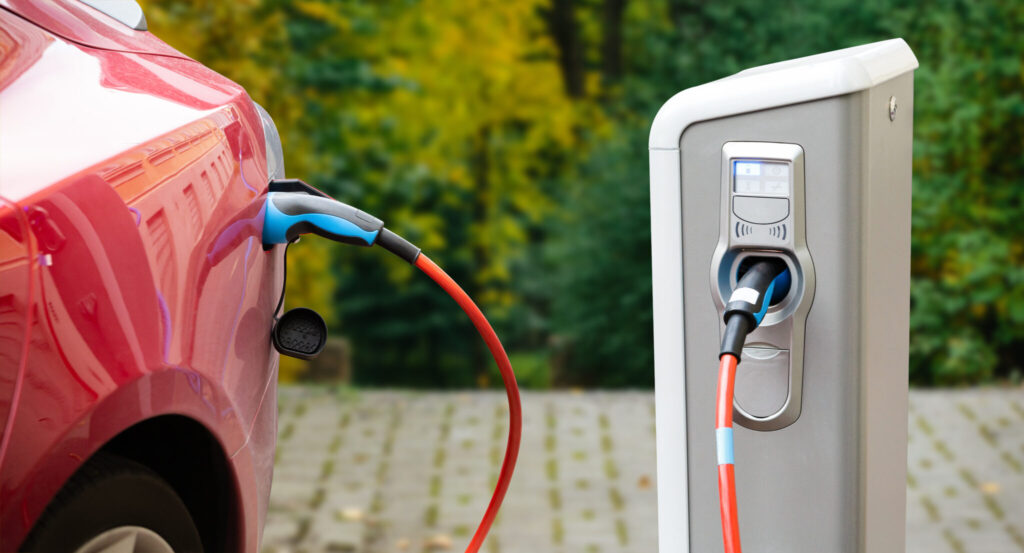
Some companies must also install charging infrastructure for electric or hybrid vehicles in their parking lots.
The type of infrastructure varies depending on the size of the company, the number of parking spaces, or the age of the building:
- Installation of charging stations: for companies with more than 250 employees, a balance sheet exceeding €43,000,000 and/or a turnover exceeding €50,000,000, with more than 20 parking spaces
- Pre-equipment (installation of conduits for cable routing): for new buildings or buildings undergoing major renovation with more than 10 parking spaces
Powesco supports you from defining your needs to operating and maintaining the terminals across all your sites:
- Compliance with the LOM law: 1 charging station every 20 parking spaces for commercial buildings
- time saving
- A simple and clear process brings you the necessary peace of mind
- a unique team that addresses all energy-related issues related to your land/building in order to optimize its use and budget
- potential for sharing with your photovoltaic shade structures
Employer Mobility Plan
Finally, companies with 50 or more employees on the same site located in an urban area of more than 100,000 inhabitants must develop an employer mobility plan.
Its objective is:
- to optimize and increase the efficiency of travel related to the company's activity
- reduce pollution generated by transport
- limit infrastructure congestion (traffic jams).
This plan must be sent to the metropolitan area.
How to comply with the LOM law?
To comply with the provisions of the LOM law, you must:
- comply with the greening quotas for your vehicle fleet;
- pre-equip your parking spaces or install a network of charging stations for your business;
- develop an employer mobility plan
The ecological bonus to help your company renew its fleet
The government has introduced an eco-bonus to help businesses finance the renewal of their vehicle fleets. This financial aid is granted when a clean vehicle is purchased, with an environmental score of at least 60/100.
The Advenir grant to help your company finance its fleet of charging stations
Furthermore, financial assistance is available for installing charging stations in businesses. For example, the Advenir program offers a grant for installing charging stations for fleets of heavy goods vehicles. The amount varies depending on the power of the installation.


What opportunities does the LOM law offer businesses?
Regulatory compliance
The LOM law allows companies to anticipate the growing demands for sustainable mobility, particularly in Low Emission Zones (LEZs) where internal combustion engine vehicles are being progressively restricted. By investing now in suitable infrastructure, you avoid penalties and remain operational across all regions.
Cost optimization
Switching to electric also means optimizing your mobility budget:
- Reduced maintenance costs: no oil changes, fewer wear parts.
- electricity costs are more stable and often lower than fuel costs
- Bonus: local electricity production thanks to photovoltaic canopies, to recharge your vehicles at a lower cost.
Energy transition
The LOM law is a lever for sustainably reducing your carbon footprint and integrating renewable energies into your business. Every charging point installed, every internal combustion engine vehicle replaced by a low-emission vehicle contributes to your low-carbon trajectory and your CSR commitments.
Brand image
Compliance with the LOM law contributes to your attractiveness:
- convenience for employees and partners, who can recharge on site or at home (with a charging station installed at their home in some cases)
- employee retention, with employees increasingly sensitive to environmental commitments
- positive visibility with your customers, suppliers and investors.
The LOM law is not just a regulatory constraint for businesses. It's also a strategic opportunity to rethink your mobility, enhance the value of your assets, and produce green electricity locally. Anticipate your obligations now and transform them into competitive advantages with an expert partner in sustainable mobility.
Do you have a project to install charging stations or a solar parking lot?
Contact Powesco: we help you transform the LOM law into a lever for energy performance.